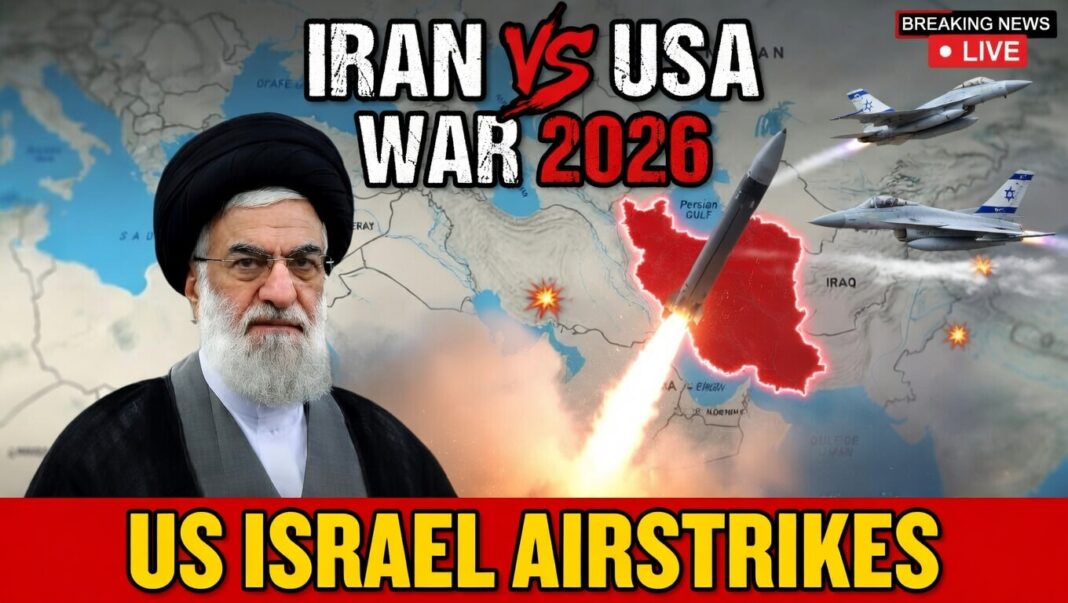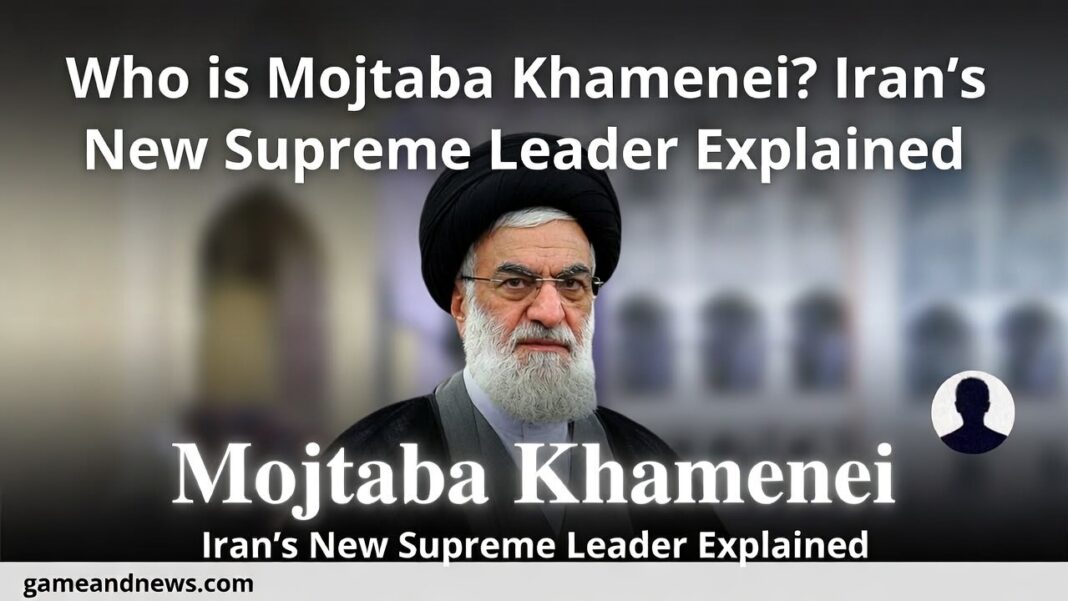
The world changed on February 28, 2026. Iran’s Supreme Leader of 36 years was killed in a surprise airstrike — and overnight, the most powerful position in the Islamic Republic became empty. Within just 10 days, Iran named its new leader. His name is Mojtaba Khamenei, and right now, he is one of the most searched and talked-about figures on the planet.
If you have been watching the news and asking yourself who is this man, where did he come from, and what does his leadership mean for the ongoing war? this article answers all of that in plain, simple language. No confusing political jargon. Just the facts you need to understand what is happening in Iran right now.
⚡ Key Takeaway: Mojtaba Khamenei, 56, is the son of Iran’s assassinated Supreme Leader Ali Khamenei. He was elected as Iran’s new Supreme Leader on March 9, 2026. He is a hard-liner with deep ties to Iran’s Revolutionary Guard and has already threatened the US with military consequences.
Table of Contents
- How Mojtaba Khamenei Became Supreme Leader
- Who Exactly is Mojtaba Khamenei?
- What Does He Believe? His Ideology Explained
- How the World is Reacting
- What His Leadership Means for the Iran War
- Is He More Dangerous Than His Father?
- Full Timeline of Events
- Frequently Asked Questions (FAQ)
How Mojtaba Khamenei Became Supreme Leader
The story of Mojtaba Khamenei’s rise to power begins with one of the most shocking events of 2026. On February 28, his father — Ali Khamenei, who had ruled Iran for 36 years — was killed in a joint US-Israel airstrike on his compound in Tehran. The attack sent shockwaves across the world and triggered an immediate constitutional crisis inside Iran.
Iran’s government moved fast. The Assembly of Experts — an 88-member clerical body whose sole job is to select and supervise the Supreme Leader — was convened in an emergency session within days. From March 3 to March 8, 2026, they debated and voted behind closed doors. On March 9, 2026, they made their announcement: Mojtaba Khamenei would become the Islamic Republic’s second-ever Supreme Leader.
The decision was controversial even within Iran. Many critics pointed out that the Supreme Leader’s role was never meant to be passed from father to son — that kind of dynastic handover contradicts the principles of the 1979 Islamic Revolution. Supporters, however, argued that Mojtaba was the most stable and reliable choice in a moment of national crisis, when Iran was already under active military attack.
📌 Why This Matters: This is only the second time in Iran’s history that a Supreme Leader has been chosen. The first was in 1989, when Ali Khamenei himself succeeded Ayatollah Khomeini. Mojtaba now holds more power than any president, general, or government official in Iran.
Who Exactly is Mojtaba Khamenei?
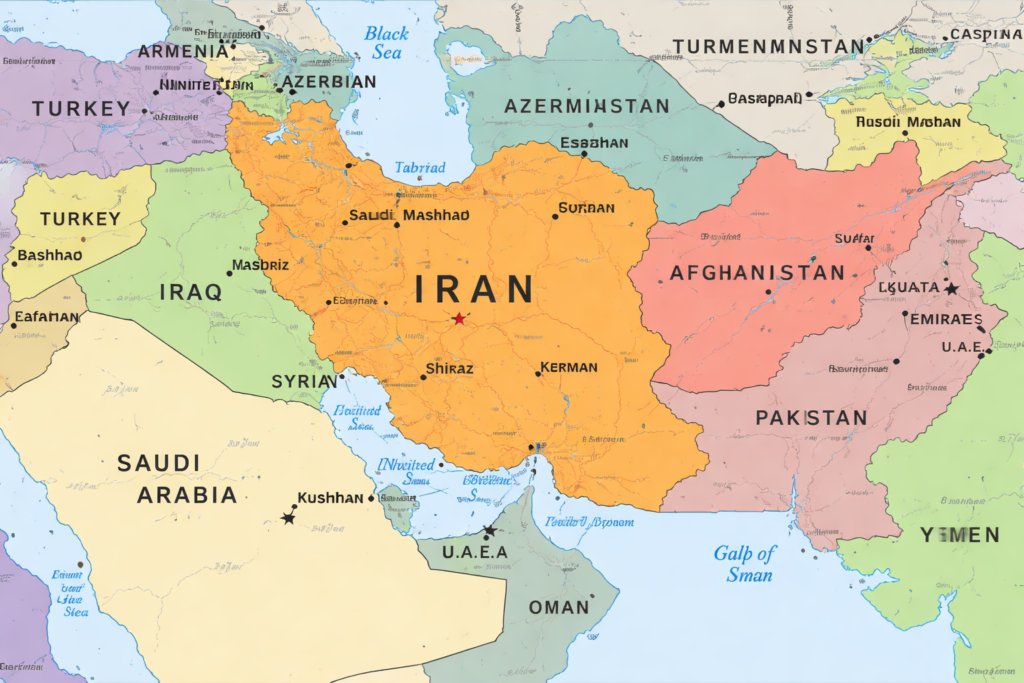
Mojtaba Khamenei was born in 1969, making him 56 years old. He is the second son of Ali Khamenei and spent most of his adult life operating in the background of Iran’s government — powerful, but deliberately out of the public spotlight.
Here are the key facts about him:
- Age: 56 years old (born 1969)
- Relationship: Second son of former Supreme Leader Ali Khamenei
- Religious rank: Does not hold the title of Grand Ayatollah — which is unusual for a Supreme Leader
- Main power base: Islamic Revolutionary Guard Corps (IRGC) — Iran’s most powerful military force
- Public profile: Extremely low before 2026 — deliberately stayed out of the public eye
- Known for: Intelligence operations, behind-the-scenes political coordination, hard-line ideology
Unlike his father, Mojtaba never built a public political career. He has rarely given interviews, almost never appeared on television, and was almost unknown to average Iranians. What he built instead was something arguably more powerful — a private network of loyalty inside the IRGC and Iran’s intelligence apparatus. For over a decade, political insiders described him as a key unofficial link between the Supreme Leader’s office and the military establishment.
In short, he is a man who spent years learning how power works from the inside — and now he holds all of it.
What Does He Believe? His Ideology Explained
Mojtaba Khamenei is, by every measure, a hard-liner. If you were expecting Iran’s new Supreme Leader to be someone who might soften the country’s approach toward the West, seek dialogue, or pursue peace talks — the early signs strongly suggest the opposite.
In his very first public statement as Supreme Leader, Mojtaba made three things immediately clear:
- The Strait of Hormuz — one of the world’s most critical oil shipping lanes, through which roughly 20% of global oil supply passes — would remain closed as long as US and Israeli forces were active in the region.
- He issued a direct warning: all US military bases in the Middle East should shut down or face military attack.
- He framed the entire conflict as Iran’s defensive response to what he called “decades of American and Zionist aggression” — not as something Iran started.
These are not the words of a pragmatist looking for a way out. They are the words of someone who believes deeply that Iran must fight — and that backing down would be a betrayal of the revolution his father spent 36 years defending.
💡 Simple Way to Understand His Position: Imagine someone who grew up watching their father lead a country while being constantly threatened, sanctioned, and attacked by foreign powers. Now imagine that father has just been assassinated by those same powers. Mojtaba Khamenei is not in the mood for compromise.
How the World is Reacting to Iran’s New Leader
Reactions from world leaders have come fast — and they reveal exactly how divided the world is on this conflict.
🇺🇸 United States
President Trump publicly called Mojtaba an “unacceptable” choice and described the father-to-son transfer of power as proof of the regime’s weakness. The US has not ruled out further military strikes targeting Iran’s new Supreme Leader directly.
🇮🇱 Israel
Israel has been the most aggressive in its public response. Israeli officials have described Mojtaba Khamenei as a legitimate military target — continuing their policy of striking Iranian leadership figures who order attacks on Israeli territory.
🇷🇺 Russia
President Putin offered a starkly different response. Within hours of the announcement, Russia pledged what it called “unwavering” support for Iran’s new Supreme Leader, condemned the assassination of Ali Khamenei as a violation of international law, and deepened Russia’s commitment to supplying Iran with military and economic support.
🇨🇳 China
Beijing called for “immediate de-escalation” and offered to host peace talks — though neither Iran nor the US has publicly responded to that offer yet.
🌍 Pakistan and the Gulf States
Countries in Iran’s immediate neighbourhood are watching nervously. Pakistan, which shares a long and complex border with Iran, has urged all parties to avoid further escalation. Saudi Arabia, despite its historically tense relationship with Tehran, has also called for restraint — largely out of fear about what a prolonged conflict will do to regional oil supplies and economic stability.
What Mojtaba Khamenei’s Leadership Means for the Iran War
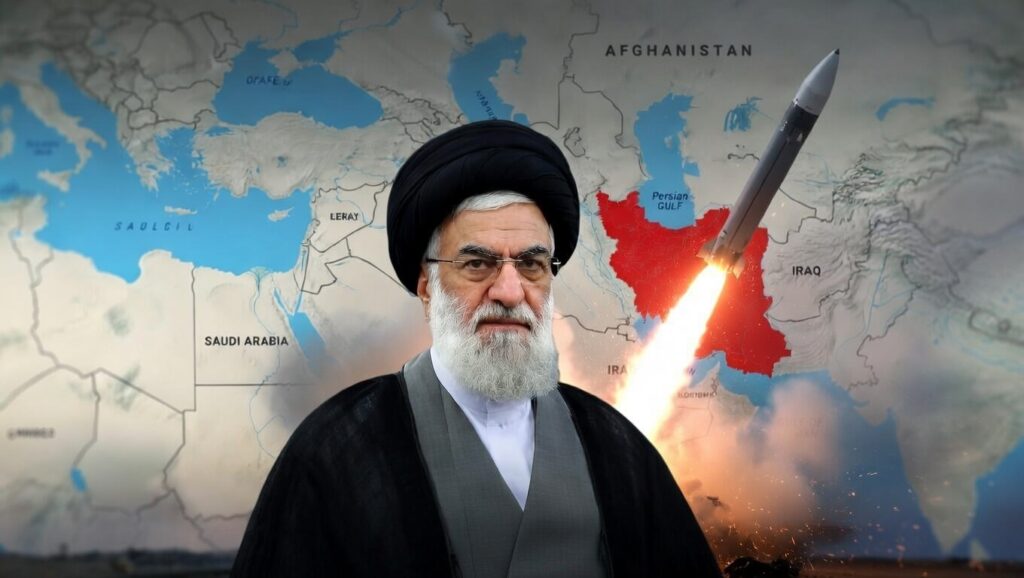
This is the question that matters most right now. The Iran-US conflict is already in its third week, and the appointment of a known hard-liner as Supreme Leader makes a quick ceasefire much less likely, not more.
Here is what we can reasonably expect under Mojtaba Khamenei’s leadership:
- Continued missile and drone attacks on US bases and Israeli targets. Iran has already launched over 500 ballistic missiles and nearly 2,000 drones since the conflict began.
- The Strait of Hormuz will remain a pressure point. Keeping this waterway closed is Iran’s most powerful economic weapon against the West. It is directly causing oil price spikes globally.
- Deeper reliance on Russia and China for weapons, diplomatic cover in the UN Security Council, and economic trade routes to survive Western sanctions.
- Increased IRGC influence in all government decisions. Mojtaba’s power base is the military — expect generals to have more say than elected politicians under his leadership.
- Less chance of back-channel diplomacy. His father, despite his hard-line rhetoric, sometimes allowed quiet diplomatic contacts. Mojtaba’s opening moves suggest he may be less willing to even engage privately.
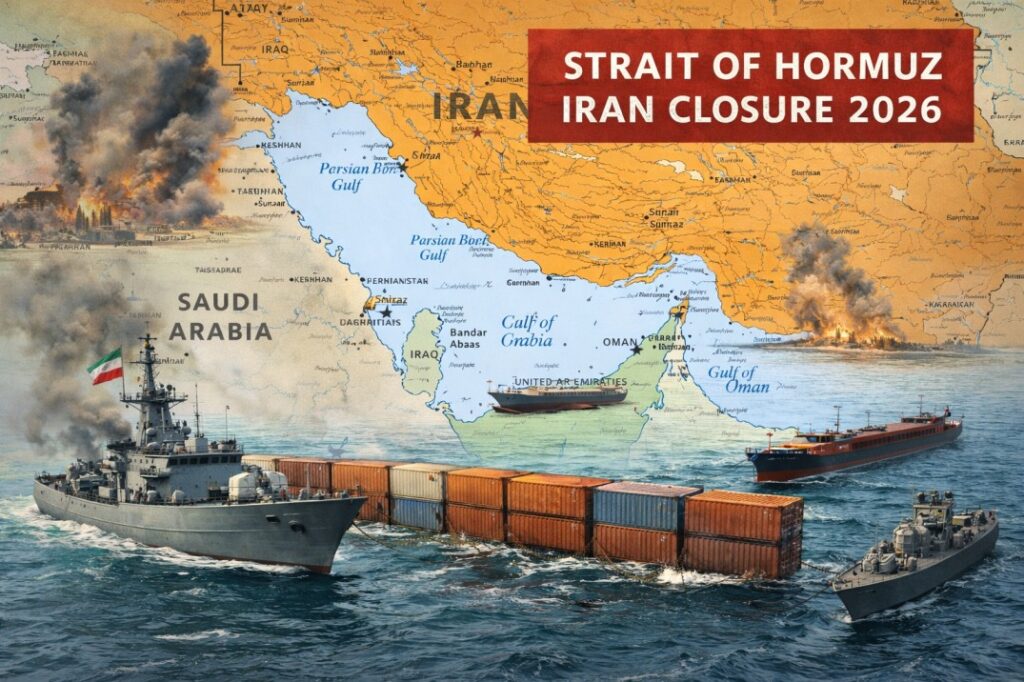
💰 What This Means for You Personally: If you pay for petrol, electricity, or imported goods, the Strait of Hormuz closure directly affects your cost of living. Around 20% of the world’s oil supply travels through that narrow waterway. The longer it stays closed, the higher prices will go globally.
Is Mojtaba Khamenei More Dangerous Than His Father?
This is the debate happening in foreign policy circles right now, and the answer is genuinely uncertain — but the reasoning is important to understand.
Some analysts argue YES — he could be more dangerous. Because Mojtaba lacks his father’s deep religious credentials and the popular legitimacy that comes with 36 years of rule, he may feel pressure to prove himself through toughness and military aggression. New leaders who feel insecure in their position often take more risks, not fewer.
Others argue he could be LESS in control. Without decades of institutional authority, Mojtaba may actually have weaker control over all the competing factions within Iran’s complex government — the IRGC, the elected parliament, the judiciary, the clerical establishment. A leader who cannot fully control his own government is unpredictable in a different, potentially more dangerous way.
What virtually every analyst agrees on is this: a leadership change in the middle of an active war creates dangerous instability. When power shifts during conflict, the risk of miscalculation — of one side doing something unexpected that triggers a massive response — goes up significantly. Right now, that risk is very real.
Full Timeline: From Assassination to New Supreme Leader
| Date | Event |
|---|---|
| Feb 28, 2026 | Ali Khamenei assassinated in US-Israel airstrike on his Tehran compound. Iran immediately enters constitutional crisis. |
| Feb 28, 2026 | Iran retaliates — launches over 500 ballistic missiles and nearly 2,000 drones targeting US military bases and Israeli cities. |
| Mar 1–2, 2026 | Iran-US conflict intensifies. International markets react — oil prices spike sharply. World leaders call for calm. |
| Mar 3–8, 2026 | Iran’s 88-member Assembly of Experts convenes emergency closed-door leadership election sessions. |
| Mar 9, 2026 | Mojtaba Khamenei officially announced as Iran’s new Supreme Leader. Becomes only second person to hold this title in the Islamic Republic’s history. |
| Mar 9, 2026 | In first statement, Mojtaba vows to keep Strait of Hormuz closed and warns US military bases to leave the region or face attack. |
| Mar 10, 2026 | Trump calls Mojtaba “unacceptable.” Russia’s Putin pledges full support. China offers to host peace talks. |
| Mar 16, 2026 | Conflict enters Day 16. US-Israel airstrikes on Isfahan reported to have killed at least 15 people. Iran vows retaliation. |
Frequently Asked Questions About Mojtaba Khamenei
❓ Who is Mojtaba Khamenei?
Mojtaba Khamenei is the 56-year-old son of Iran’s former Supreme Leader Ali Khamenei. He was elected as Iran’s new Supreme Leader by the Assembly of Experts on March 9, 2026, following his father’s assassination on February 28, 2026 in a joint US-Israel airstrike. He is only the second Supreme Leader in Iran’s history.
❓ Is Mojtaba Khamenei a religious scholar or cleric?
Mojtaba Khamenei does not hold the senior clerical rank of Grand Ayatollah, which is unusual for someone in this role. His real power comes from his political connections and his close personal ties to the Islamic Revolutionary Guard Corps (IRGC), Iran’s most powerful military force, rather than from religious authority.
❓ Why was Mojtaba Khamenei chosen as Supreme Leader?
Iran’s Assembly of Experts elected Mojtaba in an emergency session after his father was assassinated. He was chosen primarily because of his existing behind-the-scenes power within the IRGC and the regime’s inner circle, and because he represented the most stable and familiar choice during a moment of national crisis and active military conflict.
❓ What did Mojtaba Khamenei say about the Iran-US war?
In his first public statement as Supreme Leader, Mojtaba Khamenei vowed to keep the Strait of Hormuz closed and warned all US military bases in the Middle East to shut down or face military attacks. He framed the conflict as Iran’s defensive response to foreign aggression and showed no immediate signs of seeking a ceasefire.
❓ What did Trump say about Iran’s new Supreme Leader?
President Trump publicly called Mojtaba Khamenei an “unacceptable” choice and described the father-to-son transfer of leadership as a sign of the Iranian regime’s weakness. The US government has not ruled out further military strikes targeting Iran’s new Supreme Leader.
❓ Will the Iran war end now that there is a new Supreme Leader?
Most foreign policy analysts believe the appointment of Mojtaba Khamenei, a hard-liner with strong military ties, makes a quick end to the conflict significantly less likely. His aggressive opening statements and his close relationship with the IRGC suggest Iran will continue fighting rather than pursue an immediate ceasefire or diplomatic solution.
❓ How does the Strait of Hormuz closure affect oil prices?
The Strait of Hormuz is one of the world’s most important oil shipping routes, with roughly 20% of global oil supply passing through it. Iran’s closure of the strait has already caused significant oil price spikes. The longer it remains closed, the higher fuel and energy prices will rise globally — including in Pakistan, Europe, and the US.
Final Thoughts
Mojtaba Khamenei is now the most powerful man in Iran — and one of the most consequential figures in global politics today. He came to power suddenly, under extreme circumstances, and his early actions make clear that he has no intention of backing down from the conflict that killed his father.
For the rest of the world — whether you live in the Middle East, Europe, Asia, or anywhere else — the decisions this man makes in the coming weeks will shape the direction of a war that is already affecting oil prices, global markets, and regional security.
We will continue covering this story daily at gameandnews.com. Bookmark this page and check back for the latest updates.